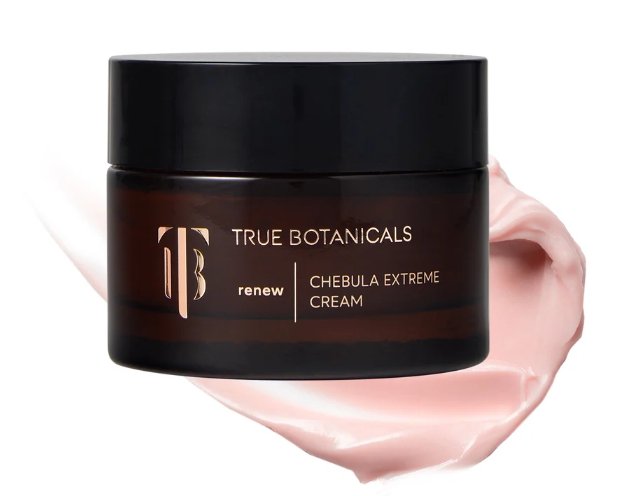
True Botanicals Chebula Extreme Skin Barrier Cream
A deeply fortifying, nutrient-dense barrier cream created to repair, protect, and strengthen compromised skin. This formula blends antioxidant-rich botanicals, fermented actives, ceramides, and nourishing plant oils to help restore resilience, lock in moisture, and defend against environmental stress.
Ingredients
This cream is made with green tea leaf extract, organic aloe vera leaf juice, hydrogenated soybean oil, organic glycerin, mango seed butter, hydrogenated ethylhexyl olivate, cetearyl olivate, sorbitan olivate, silybum marianum ethyl ester, caprylic/capric triglycerides, organic rosehip seed oil, organic jojoba seed oil, lactobacillus and acerola cherry ferment, phenethyl alcohol, organic safflower oil, avocado oil, populus tremuloides bark extract, organic raspberry seed oil, marula seed oil, terminalia chebula fruit extract, sodium hyaluronate, organic sea buckthorn seed oil, xanthan gum, hydrogenated olive oil unsaponifiables, eclipta prostrata extract, organic calendula flower extract, amyris balsamifera bark oil, cananga odorata flower oil, cedrus atlantica wood oil, juniperus mexicana oil, juniperus virginiana oil, organic lavender oil, ethylhexylglycerin, sodium phytate, viola tricolor extract, tocopherol, neem leaf extract, organic lecithin, moringa seed oil, citric acid, leuconostoc and radish root ferment filtrate, 1,2-hexanediol, caprylyl glycol, water, benzyl benzoate, benzyl salicylate, beta-caryophyllene, farnesol, geranyl acetate, limonene, linalool, eugenol, pinene, linalyl acetate, and terpineol.
Certifications & Standards
According to the brand, this product is MADE SAFE certified
Cruelty-free
Non-GMO
Formulated without parabens, phthalates, synthetic fragrances, petroleum-derived ingredients, or conventional PEGs
What I Like
This is a true barrier-repair cream for depleted, over-treated, or environmentally stressed skin.
Chebula fruit extract delivers powerful antioxidant protection to help combat oxidative stress.
Green tea, calendula, raspberry seed, sea buckthorn, and neem provide broad botanical support for stressed skin.
Marula, avocado, rosehip, jojoba, mango butter, and olive derivatives deeply nourish and soften the skin barrier.
Sodium hyaluronate, glycerin, and ferments support hydration and skin resilience.
The texture is rich, comforting, and protective without feeling waxy or suffocating.
Things to Keep in Mind
This is a rich barrier cream and may feel too heavy for very oily or congestion-prone skin.
The formula contains multiple essential oils and natural fragrance components, which may be stimulating for fragrance-sensitive or highly reactive skin.
This is best suited for dry, compromised, post-procedure, or environmentally stressed skin rather than acne-prone skin.
EWG Rating: 5 — When the ingredient list is added to the EWG Skin Deep Analyzer, this score is generated based on the analyzer’s conservative database flagging. Aspen bark contains salicin-like compounds, which EWG tends to flag based on oral medication risk models (similar to aspirin), not on low-dose topical cosmetic use. This rating reflects database classification rather than confirmed risk in the finished product.
Sensitive Skin & Pregnancy Considerations
Many of the base ingredients in this cream — including aloe, mango butter, jojoba oil, marula oil, rosehip oil, avocado oil, glycerin, sodium hyaluronate, and tocopherol — are generally considered low risk for topical use during pregnancy and breastfeeding.
This formula also contains essential oils such as lavender, ylang ylang, cedarwood, amyris, and juniper, along with naturally occurring fragrance components like linalool, limonene, and benzyl salicylate. These aren’t linked to confirmed hormonal or developmental harm at the low levels used in cosmetic formulas. Still, they can be more stimulating or irritating for very scent-sensitive or reactive skin.
Populus tremuloides (aspen) bark extract is another ingredient that EWG rates more conservatively because it contains salicin-like compounds; that concern is mainly based on oral medication data (similar to aspirin), not on low-dose topical use in a cream like this.
There is no confirmed evidence that this product is unsafe when used as directed during pregnancy or breastfeeding. Still, if your skin is especially sensitive or you’re cautious about fragrance and botanicals during this time, a patch test is recommended.