
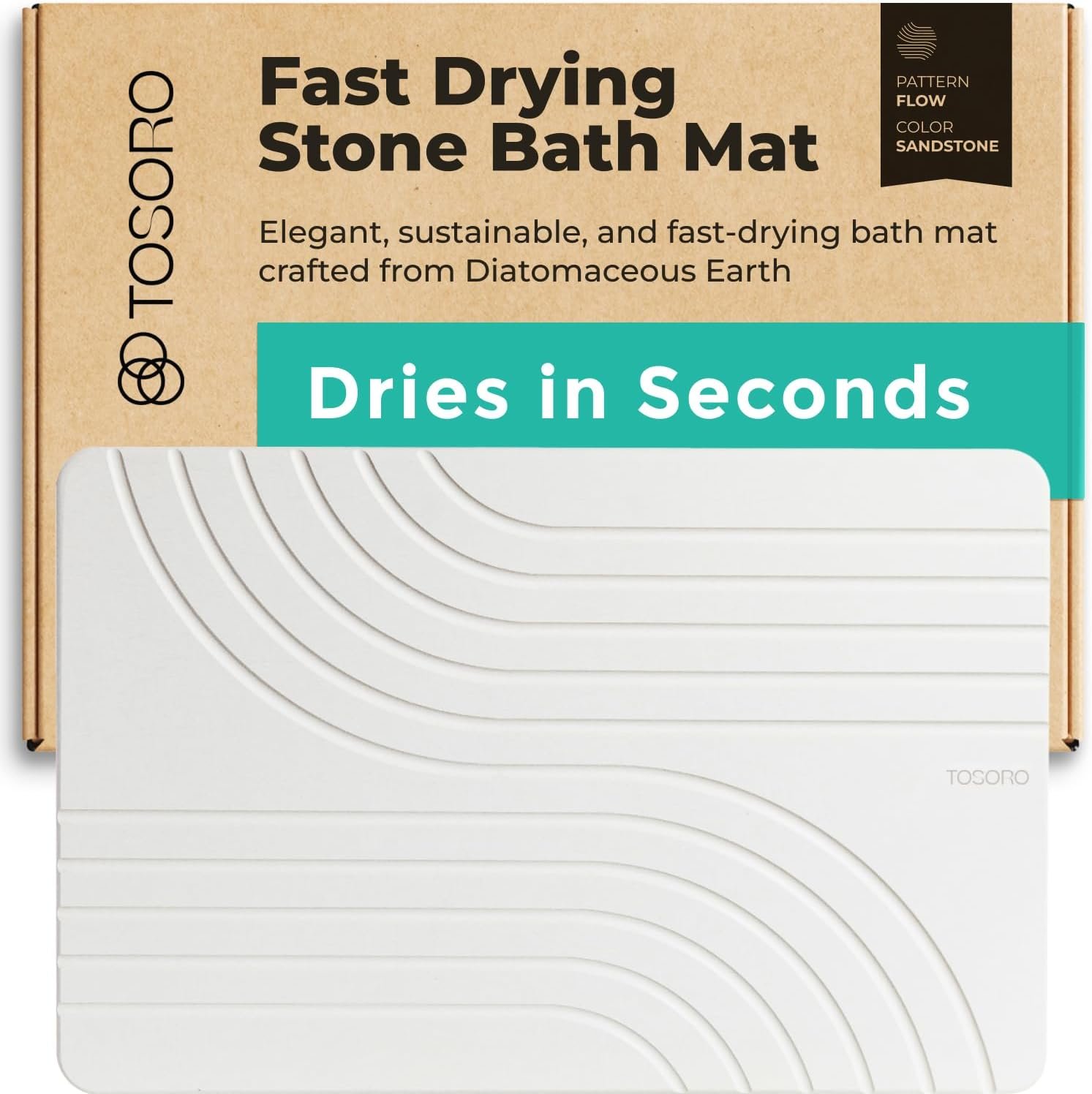
Stone Bath Mat — Diatomaceous Earth
Important note on this category
Stone bath mats are designed to absorb water and dry quickly without relying on fabrics, foams, or plastic backings. Because they sit in a high-moisture area and come into direct contact with bare feet, I focus on material simplicity and transparency in this category.
What I typically avoid
When I’m choosing a stone bath mat, I tend to skip options made with or treated with:
PVC (vinyl) or plastic backings
BPA
Phthalates or plasticizers
Heavy surface sealants or waterproof coatings
Formaldehyde-based finishes
Flame-retardant treatments
Strong chemical or synthetic odors
What I look for instead
I prioritize stone bath mats that:
Clearly state diatomaceous earth or natural stone as the primary material
Use minimal binders with clear material disclosure
Rely on the natural absorbency of the stone rather than added coatings
Have a smooth, lightly porous surface that absorbs and releases water efficiently
Avoid unnecessary plastic layers or synthetic finishes
Certification context
Stone and mineral bath mats typically do not carry textile certifications like OEKO-TEX or GOTS, and that’s expected. In this category, I focus more on material clarity, minimal processing, and low odor rather than third-party labels.
Material context
Diatomaceous earth is a naturally occurring mineral known for its ability to absorb moisture and quickly release it back into the air. Unlike fabric bath mats, a stone mat doesn’t trap water within fibers or rely on PVC or foam backings. The material itself does the work, which keeps the overall material profile straightforward.
How I think about this choice
This type of bath mat fits well within a low-tox approach because it avoids PVC and common plastic components altogether and relies on a single, well-understood material to perform its function. It’s a practical option for anyone looking to simplify materials in their bathroom without overthinking the choice.