
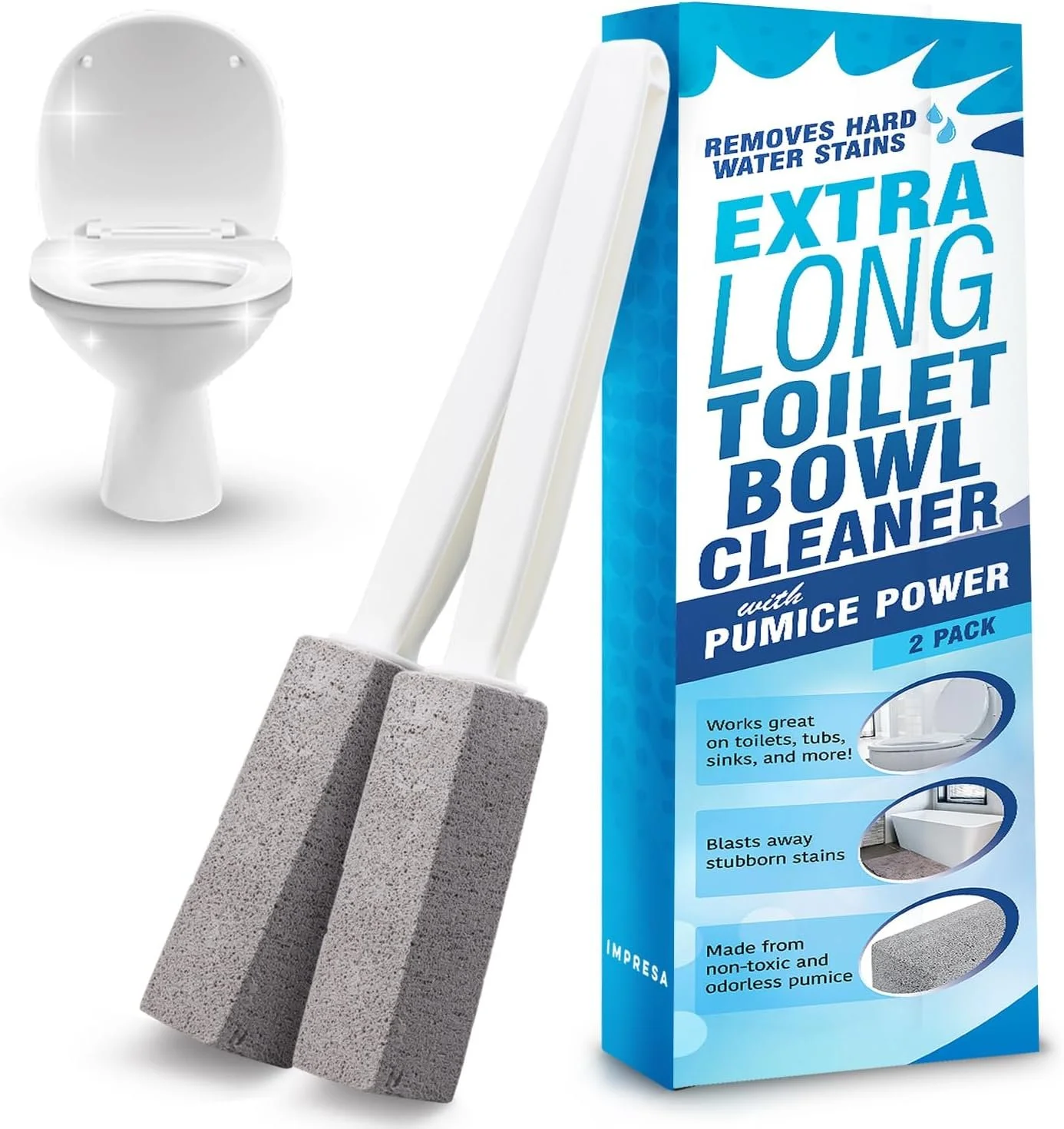
Pumice Stone Cleaning Block
Important note on heavy buildup
For tough buildup in tubs, toilets, and sinks, a tool is often more effective than a scrub or harsh cleaner alone. Instead of reaching for more potent chemicals, I prefer using mechanical removal when it makes sense. It’s often faster, more targeted, and avoids unnecessary exposure to harsh cleaning products.
What I look for in a pumice stone
For this type of cleaning, I look for a softer pumice stone rather than a very dense or overly hard block. Softer pumice breaks down slightly as you use it, which helps it glide over hard surfaces and lift buildup without digging in.
I avoid very hard pumice or stone-like blocks that don’t wear down, as they can act like sandpaper and are more likely to scratch porcelain, ceramic, or enamel. A softer stone, paired with water and light pressure, is key to safely removing buildup.
Product description
This pumice stone cleaning block is made from natural pumice and designed to remove mineral buildup, soap scum, rust stains, and stuck-on grime from hard, non-delicate surfaces. When used with water and gentle pressure, it lifts buildup effectively without scratching porcelain, ceramic, or similar surfaces.
This is the tool I reach for when regular scrubbing isn’t enough, but I still want to avoid harsh cleaners or plastic scouring pads.
What I like
I like that it’s a simple, mineral-based tool with no chemical coatings or additives.
It removes tough buildup without needing harsh acids or aggressive cleaners.
When used correctly, it’s gentle enough for porcelain toilets, tubs, and sinks.
It lasts a long time but still wears down gradually, which helps protect surfaces.
Things to keep in mind
This tool is best for hard, non-delicate surfaces only. I don’t use it on soft plastics, acrylics, polished metals, or specialty finishes.
Always use water and light pressure. Let the stone do the work rather than forcing it.
Testing a small, inconspicuous area first is always a good idea.