
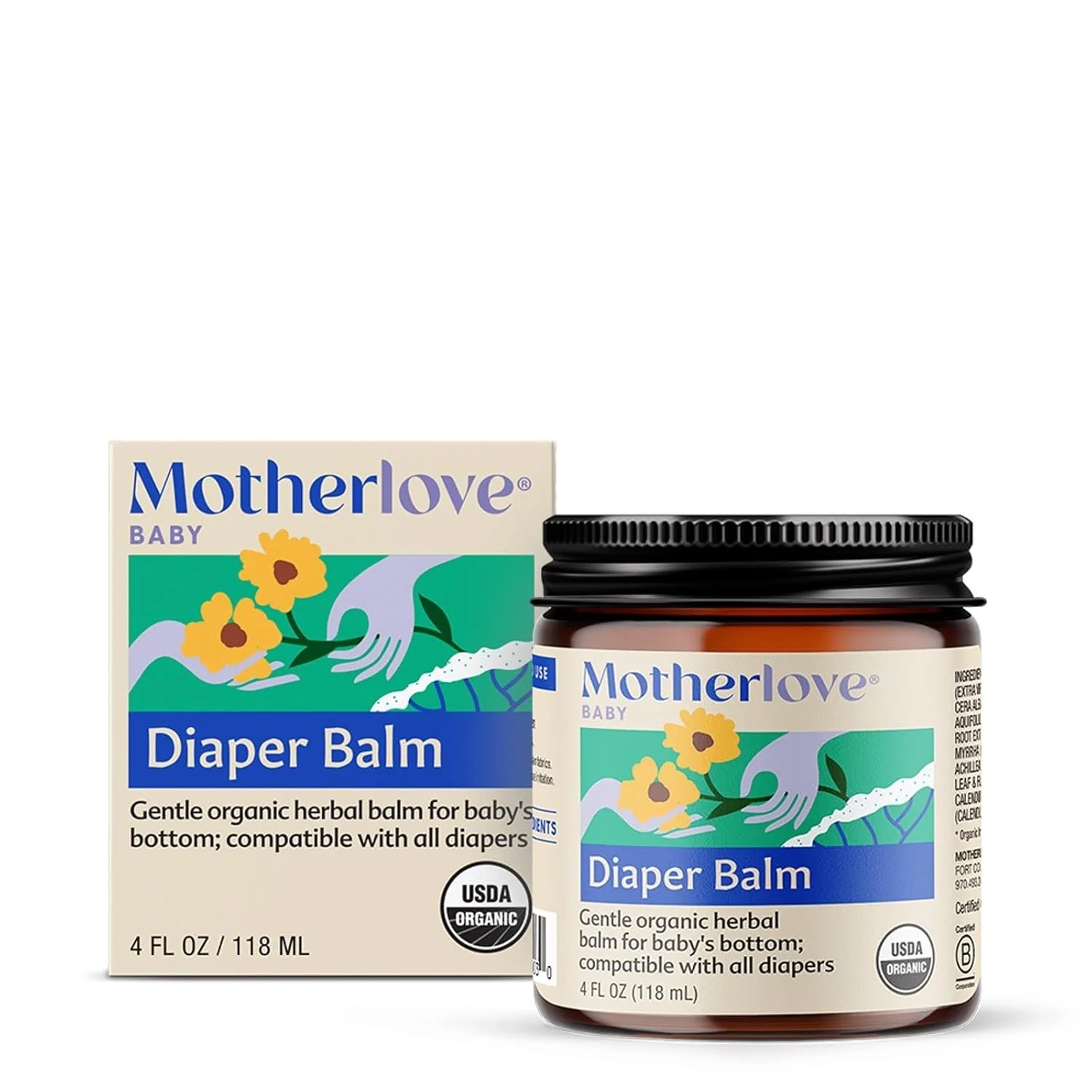
Motherlove Diaper Balm
Important note on diaper balms
When I’m choosing a diaper balm, I look for formulas that support the skin barrier with a simple base and clearly listed ingredients. Since this is a leave-on product used on sensitive skin, I prefer options that skip added fragrance and keep the ingredient list short so it’s easier to decide what works best for your baby.
What I avoid in baby balms and diaper care
In this category, I personally choose to avoid products with undisclosed fragrance blends or vague “fragrance/parfum” labeling, phenoxyethanol in baby products, parabens, formaldehyde-releasing preservatives, petroleum-derived ingredients like mineral oil, petrolatum, dimethicone, and propylene glycol, and antibacterial additives such as triclosan, triclocarban, or benzalkonium chloride.
Product description
Motherlove Diaper Balm is an herbal, oil-and-wax-based diaper balm designed to help protect and comfort irritated skin. The formula uses extra virgin olive oil and beeswax as the base, with traditional herbal ingredients like Oregon grape root, myrrh, yarrow, and calendula. It’s a simple, fragrance-free option that many families use between diaper changes when baby’s skin needs extra support.
Ingredients
Extra virgin olive oil*, beeswax*, Oregon grape root*, myrrh gum*, yarrow herb*, calendula flower.*
*Organic
Certifications
• Certified Organic by Oregon Tilth (brand stated)
• Certified Cruelty Free by Leaping Bunny (brand stated)
• Non-GMO (brand stated)
• Clinically tested to not cause irritation (brand stated)
What I like
I like that it’s a short, clearly labeled formula with organic oils and herbs, no added fragrance, and a simple balm texture that supports diaper-area comfort.
Things to keep in mind
Because this is a concentrated balm, a small amount usually goes a long way.
Herbal ingredients like calendula, yarrow, myrrh, and Oregon grape root are commonly used in topical skincare, but individual sensitivities can still happen, especially on already-irritated skin. Patch testing or introducing it when skin is calm can be a helpful way to see how your baby does with it.