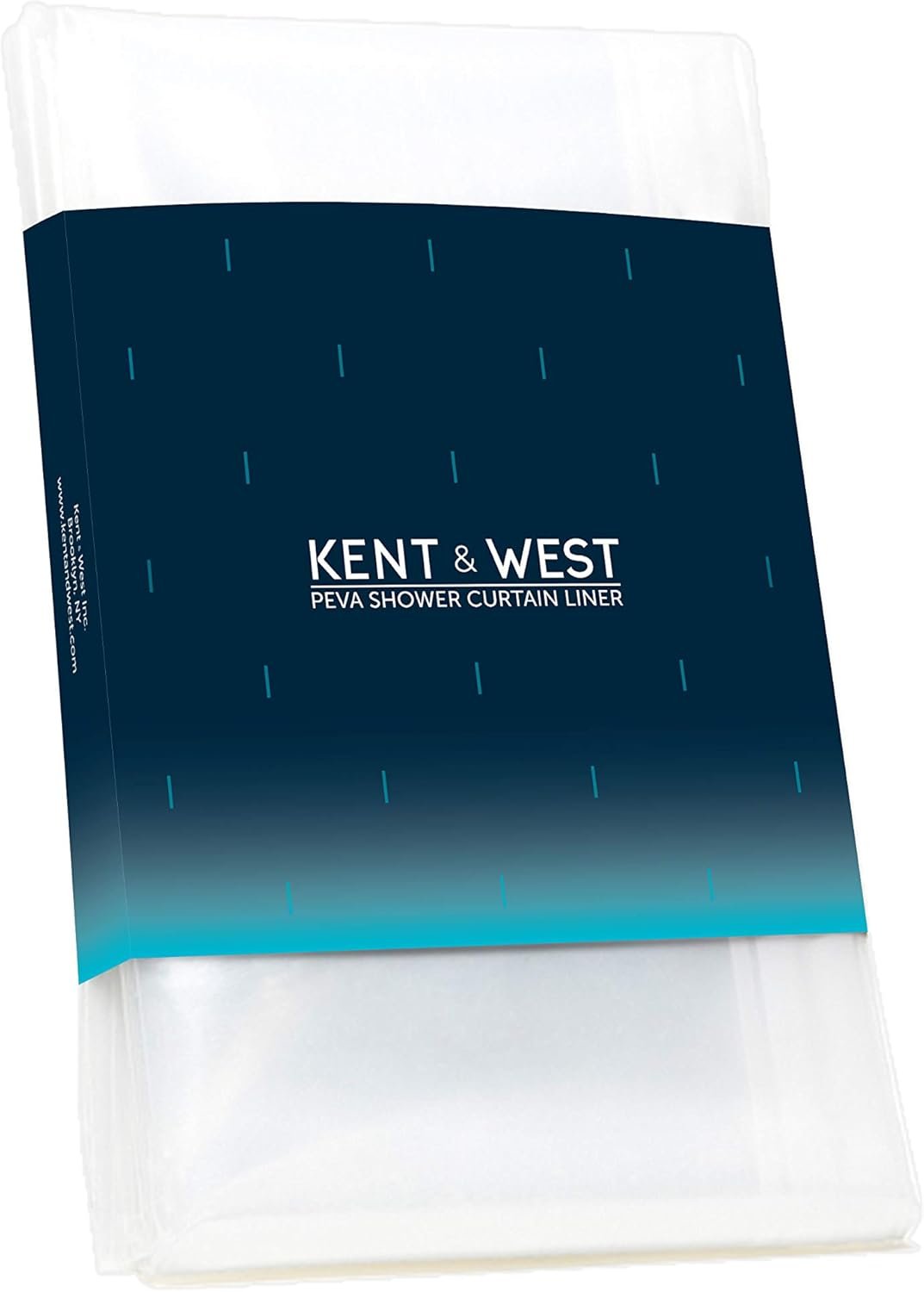
Kent & West PEVA Shower Curtain Liner
Important note on this category
Shower liners live in a warm, humid environment and are used daily. Because of that, the material matters more here than in some other home categories. My goal isn’t to eliminate every exposure, but to choose materials that are less likely to off-gas heavily and that work well in real life.
What I typically avoid
When I’m choosing a shower curtain or liner, I tend to skip options made with or treated with:
PVC (vinyl)
BPA
Phthalates are commonly used to soften vinyl
Formaldehyde-based finishes are sometimes used on fabric curtains to reduce wrinkles or improve durability
Flame-retardant treatments, especially those added for commercial or hotel use
Strong or lingering plastic or chemical odors
What I look for instead
I prioritize shower curtains and liners that:
Clearly labeled PVC-free and BPA-free
Use PEVA as the liner material when plastic is needed
Use simpler materials with fewer added treatments
Look for certifications like OEKO-TEX, GREENGUARD, or GOTS when they’re available (especially for fabric curtains)
Material context
This liner is made from PEVA, a PVC-free plastic alternative commonly used in place of traditional vinyl. PEVA does not rely on chlorine-based processing and is generally associated with lower odor compared to vinyl liners. While it is still plastic, it’s often considered a lower-exposure option for this category.
How I think about this choice
This liner fits well within a low-tox approach by removing PVC and keeping the material profile simple. It’s a practical option for households that want to reduce higher-concern materials while still choosing something that works in everyday use.