
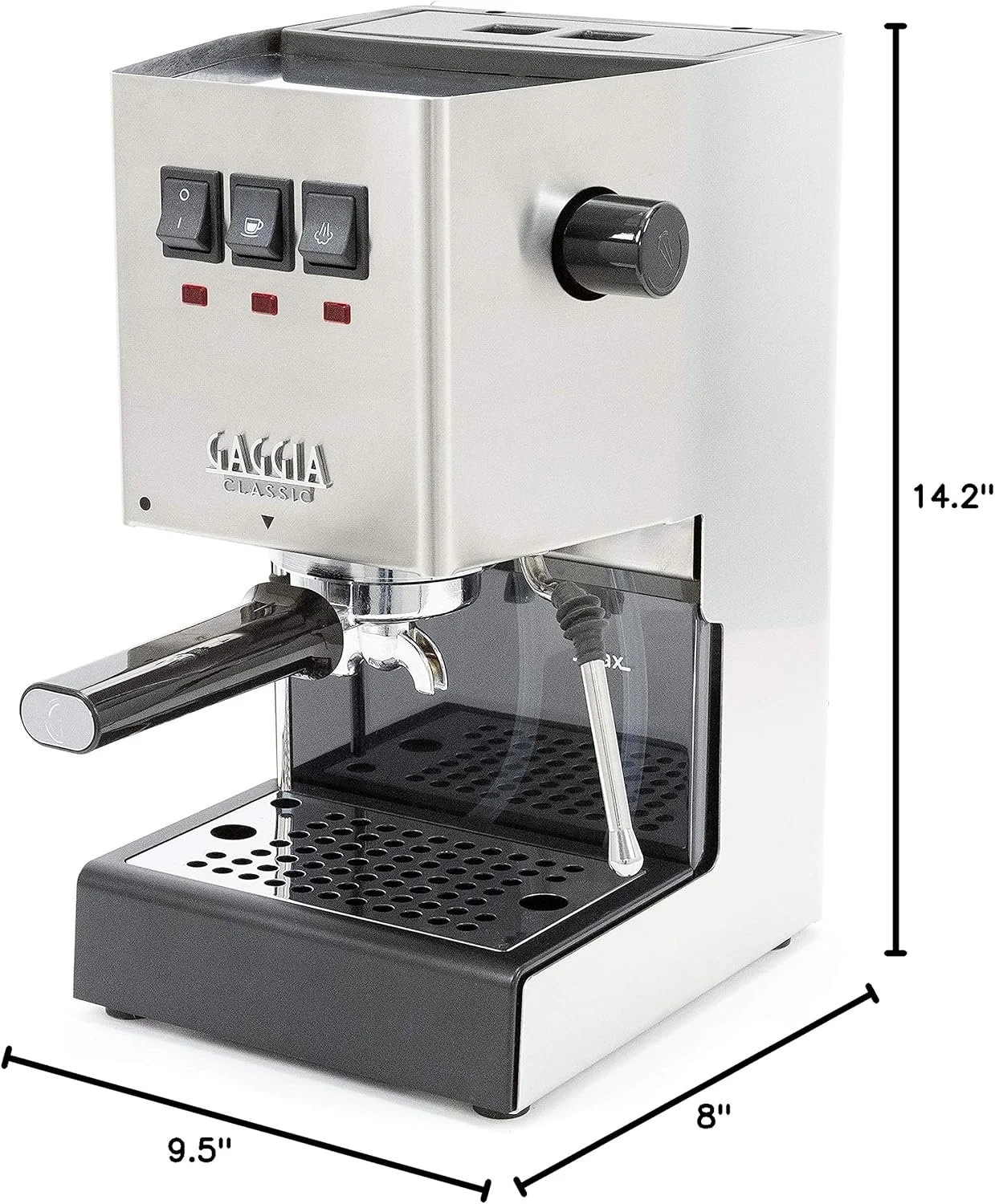
Gaggia Classic Pro Espresso Machine
Important note on espresso machines
Espresso machines are among the more complex appliances in terms of materials. Hot water is pushed through the system under pressure, meaning anything along that pathway could affect what ends up in your cup.
Most machines on the market still contain a mix of materials, including plastics, aluminum, and sometimes PTFE-based components used in tubing or internal parts. There isn’t a perfect option, so what I focus on is reducing overall exposure by choosing machines that rely more on durable materials and simpler internal construction.
What I try to avoid
– Excess plastic in areas where hot water flows regularly
– PTFE or “nonstick-type” materials are used in tubing or internal components when possible
– PVC tubing that may introduce phthalates
– Aluminum on primary food contact surfaces when possible
– Machines with a high amount of undisclosed internal materials
What I look for instead
– Stainless steel housing and portafilter components
– Brass or copper boilers for improved heat stability
– Standard 58mm portafilter systems
– Simpler internal construction with fewer plastic components
– A design that supports long-term use and maintenance
Product description
The Gaggia Classic Pro is a semi-automatic espresso machine with a more traditional, simplified internal structure than many modern consumer models.
It features a stainless steel body and a commercial-style 58mm portafilter, which is more aligned with what you see in higher-end machines. Internally, it uses a brass group head and boiler system, which helps support heat stability and more consistent extraction.
It also includes a three-way solenoid valve, which helps regulate pressure and makes cleaning easier after brewing. This type of feature is typically found in more durable, long-term machines.
The design is fully manual, allowing for control over the brewing process, and includes a steam wand for preparing milk-based drinks.
From a materials and construction standpoint, this type of machine is often considered a step up from entry-level models that rely more heavily on plastic components.
What stands out
– Greater use of metal components compared to many entry-level machines
– Brass boiler and group head for improved heat stability
– Standard 58mm portafilter setup
– Three-way solenoid valve for pressure control and easier cleaning
– Simple, durable design built for long-term use
Things to keep in mind
This type of machine is more hands-on and has a steeper learning curve than simpler or automatic options. It uses a single boiler system, which means you cannot brew espresso and steam milk at the same time and will need to switch between functions. While it incorporates more durable materials than many lower-end machines, it is not completely plastic-free internally. Regular cleaning and maintenance are important to keep performance consistent over time.