
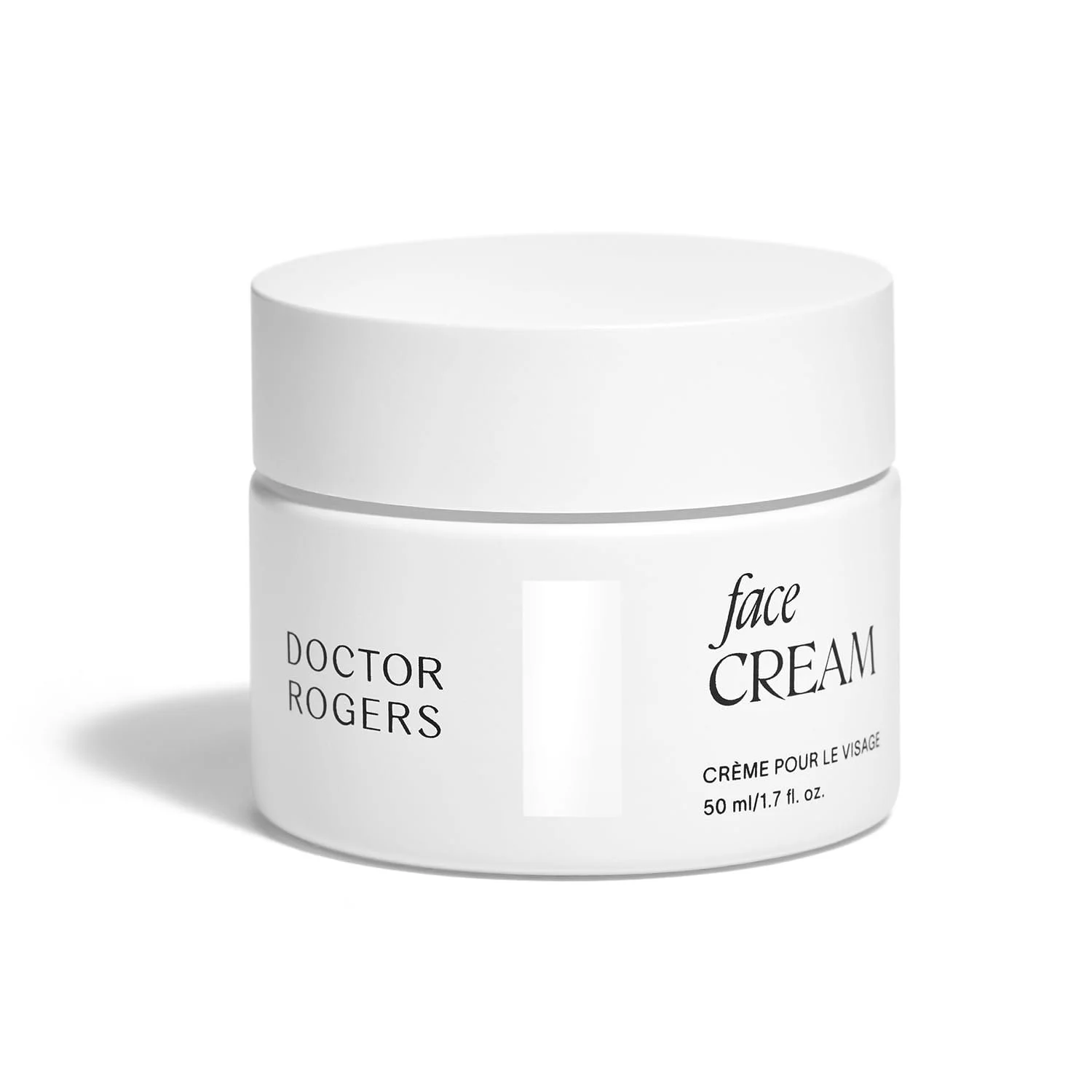
Doctor Rogers Face Cream
Important note on moisturizers
Moisturizers help support the skin barrier and maintain hydration throughout the day. Well-formulated creams typically combine humectants, emollients, and barrier-supporting ingredients that help the skin retain moisture while staying comfortable on the skin.
When I evaluate moisturizers like this, I look for formulas that rely on simple, supportive ingredients and avoid unnecessary fillers or overly complex formulations.
I also pay close attention to the ingredient list and avoid formulas that contain:
• undisclosed fragrance or parfum
• PEG compounds or ethoxylated ingredients
• petroleum-derived fillers such as mineral oil or dimethicone
• harsh preservative systems
Product description
Doctor Rogers Face Cream is a lightweight moisturizer designed to support hydration and overall skin comfort.
The formula combines squalane, shea butter, glycerin, and niacinamide to help maintain moisture while supporting the skin barrier. These ingredients are commonly used to nourish the skin and help improve the appearance of dryness and uneven texture.
Additional ingredients such as centella asiatica, allantoin, and lactobacillus help provide soothing support for the skin, while jojoba esters and plant-derived emulsifiers help create a smooth, balanced texture.
The result is a moisturizer that hydrates the skin while maintaining a lightweight feel.
Full ingredient list
Aqua (Water), Squalane, Butyrospermum Parkii (Shea) Butter, Niacinamide, Glycerin, Cetearyl Olivate, Sorbitan Olivate, Cetearyl Alcohol, Centella Asiatica Extract, Behenyl Alcohol, Jojoba Esters, Leuconostoc/Radish Root Ferment Filtrate, Adenosine, Allantoin, Lactobacillus, Cocos Nucifera (Coconut) Fruit Extract, Xanthan Gum, Citric Acid
What I like
I like that this formula focuses on a relatively short ingredient list built around barrier-supporting ingredients like squalane, glycerin, and shea butter.
Niacinamide and centella asiatica are commonly used in skincare to support skin balance and help calm irritation.
The EWG analyzer rating for this formula is around a 1, which reflects a very low hazard profile based on the available ingredient data.
Things to keep in mind
Even simple formulas can behave differently depending on individual skin type, so patch testing is always a good idea when introducing a new moisturizer.
Ingredient sourcing and manufacturing practices can influence ingredient quality, which is something I always keep in mind when evaluating skincare products.