
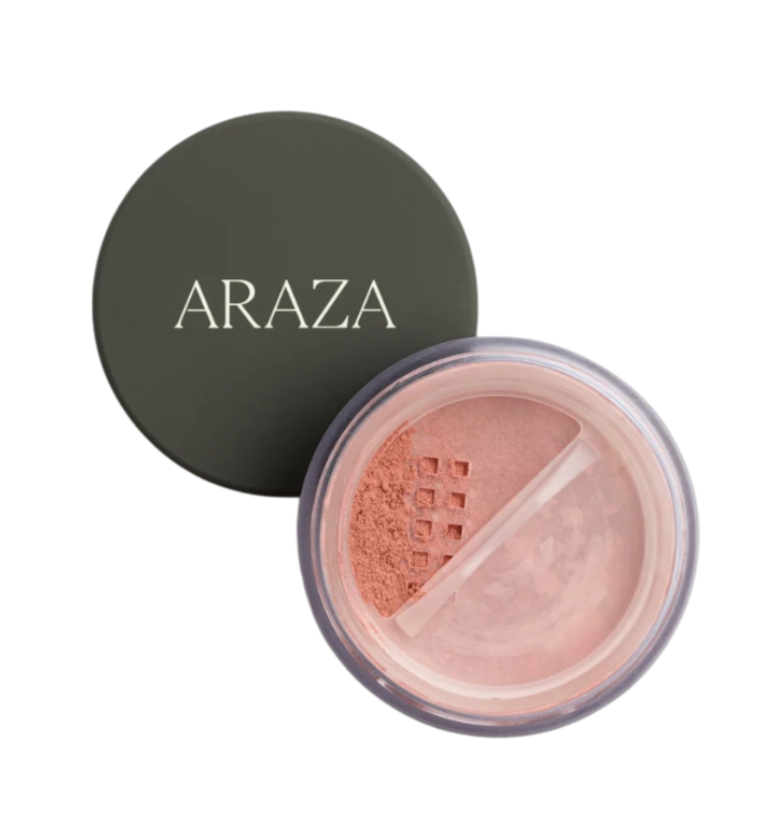
Araza Fresh Mineral Cheek Color
A mineral-based loose powder blush designed to give a soft, natural flush using earth-derived pigments and skin-supportive botanical ingredients. The formula adds a healthy glow while staying lightweight and breathable — perfect for those who want clean, minimal, skin-friendly makeup.
Ingredients
Formulated with non-nano zinc oxide, boron nitride, potato starch, sericite (mineral mica), magnesium stearate (palm-derived), Araza fruit extract, neem seed extract, and mineral pigments such as iron oxides, mica, and ultramarines (shade-dependent).
What I Like
Uses natural earth minerals and mineral pigments instead of synthetic dyes.
Araza fruit and neem extracts provide antioxidant and skin-supportive benefits.
Lightweight, breathable texture that gives a soft, natural flush.
Helps manage shine, making it an excellent option for normal to oily skin types.
Clean, simple ingredient profile that aligns well with low-tox, minimal makeup routines.
EWG Rating: 1 — low hazard based on the full ingredient analysis.
Things to Keep in Mind
As a loose powder blush, payoff is soft and buildable rather than bold.
Very dry skin may find that powder formulas emphasize texture if skin isn’t hydrated first.
Mineral pigments can shift slightly depending on natural oils or humidity.
Shade appearance can vary across different skin tones.
Sensitive or reactive skin types may still want to patch test first.
Sensitive Skin & Pregnancy Considerations
The mineral base (non-nano zinc oxide, mica, iron oxides, ultramarines, boron nitride) and starches are widely considered low risk for topical use during pregnancy and breastfeeding.
Araza fruit extract is an antioxidant-rich botanical and is generally considered low risk in topical cosmetic use.
Neem seed extract is where caution sometimes arises. The concern comes from oral neem, which has been associated with antifertility effects in animal studies — not from topical cosmetic use. The tiny cosmetic-level amount used in a powder blush has minimal absorption and is generally considered low risk when applied to intact skin.